My Innovation Journey: Emotional Regulation Through Mightier
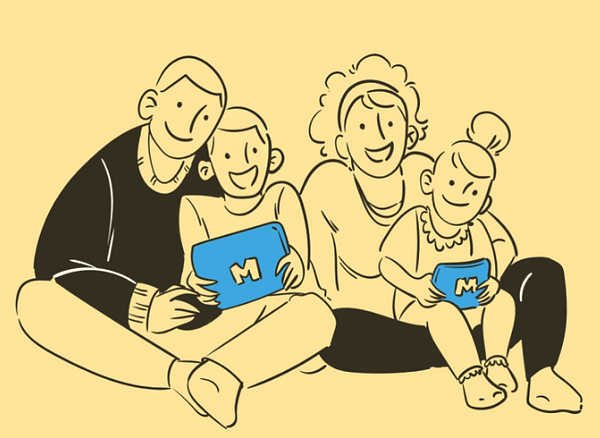
This page captures the development and implementation of my year-long innovation project in the Applied Digital Learning (ADL) program. My work focuses on helping elementary students—especially those with autism or emotional dysregulation—build emotional regulation skills through the Mightier app.
Rooted in the COVA model (Choice, Ownership, Voice, and Authenticity) and the principles of Creating Significant Learning Environments (CSLE), this project reflects my commitment to learner-centered, emotionally
responsive education (Harapnuik, 2021).

My innovation project focused on using the Mightier app to help elementary students—especially those with autism or emotional dysregulation—develop emotional regulation skills. Research supports the importance of emotional regulation in academic and social success (Gross, 2015; Prizant et al., 2005).
This real-world need gave purpose to every part of my ADL journey. I developed a strategy, tested it, reflected on it, and created tools that can be scaled and shared with others.
➡️ Explore my Literature Review
➡️ Read my Action Research Plan
➡️ See my Growth Mindset Plan


Where I Am Now
The initial implementation of the Mightier app was conducted with a small group of elementary students. Early feedback showed positive engagement and signs of behavioral improvement—particularly in how students responded to emotional triggers in real time (Gross, 2015).
Data Collected: Classroom observations and in-app engagement metrics were gathered to evaluate the impact on emotional regulation and student behavior. These findings informed both the instructional strategy and future scaling plans.
Resources Developed: A full set of professional learning materials and implementation guides was created to support educators in integrating Mightier into their classrooms.
➡️ See how I have Developed Effective Professional Learning
➡️ View my plan on Creating Significant Learning Environments
Next Steps: Starting Fall 2025, the project will expand to more classrooms, with a focus on tracking long-term outcomes and refining support based on continuous feedback.
Reflecting on the Journey
This innovation project helped me design a scalable strategy to support emotional regulation using the Mightier app. Every step—from identifying the problem to researching, designing, training, and testing—was shaped by the COVA model and CSLE principles (Harapnuik, 2021).
Having choice, taking ownership, using my voice, and addressing an authentic need made this journey transformative. I wasn’t just completing an assignment—I was creating something with real-world impact.
More than anything, I learned that emotional and academic growth go hand-in-hand, and when students feel seen and supported, they thrive.
What I’d Do Differently (Personal & Reflective)
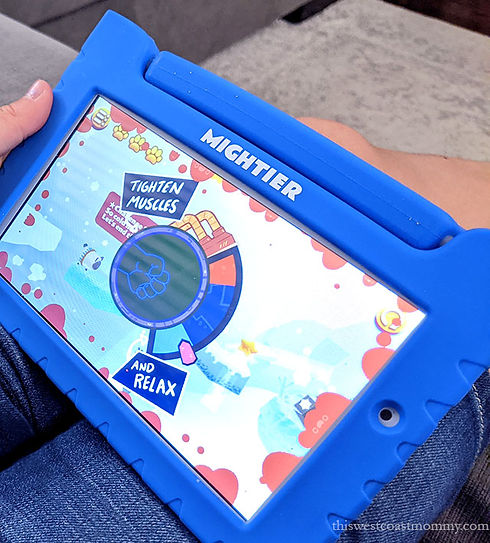
I actually used the Mightier app at home with my own son, and it gave me a powerful window into how emotional regulation tools work outside of school. Seeing his growth firsthand made me realize I should’ve built more structured home use into the classroom pilot. Including more students and families in that part of the process would’ve given me deeper insights and more well-rounded feedback.
I also would’ve trusted myself more as a leader. There were times I hesitated to push forward with ideas because I didn’t want to create conflict. Learning about Self-Differentiated Leadership helped me understand that staying grounded, clear, and calm—especially during resistance—is key to moving innovation forward (Friedman, 2007).
If I’m being honest, I’d also have chosen a more customizable website platform. Wix was a good starting point, but I spent a lot of time working around formatting challenges that distracted me from content creation.
I would’ve continued blogging even after it wasn’t required. Writing helped me reflect and stay grounded. I’m excited to keep that habit going and share more updates soon. But more than anything, this experience taught me that innovation grows from reflection, flexibility, and the courage to keep going—even when things aren’t perfect.

What Worked
-
Students responded positively to Mightier’s game-based format—it kept them engaged while teaching real emotional skills in a way that felt fun and safe.
-
The CSLE and COVA frameworks gave me purpose and flexibility, helping me stay focused on learner-centered design (Harapnuik, 2021).
-
Teachers appreciated how easy it was to follow my training materials and felt confident using the app right away.
Lessons Learned
-
Innovation takes patience, persistence, and feedback.
-
Giving learners ownership leads to more authentic engagement.
-
Real change happens when solutions are grounded in both research and lived classroom experience. Most importantly, growth happens when we stay open to learning alongside those we aim to support.

Promoting My Innovation
To ensure the impact of this project reaches beyond a single classroom, I plan to promote my work through multiple channels. I will lead internal professional development sessions, share my article for potential publication, and present findings to administrators and educators during upcoming school meetings. I also intend to incorporate Mightier strategies into future SEL training and PD resources, helping more educators support emotional growth in their students through practical, research-based tools.
References
Bates, A. W. (2019). Teaching in a digital age: Guidelines for designing teaching and learning. Tony Bates Associates Ltd.
https://pressbooks.bccampus.ca/teachinginadigitalagev2/
Dweck, C. S. (2006). Mindset: The new psychology of success. Random House.
Friedman, E. H. (2007). A failure of nerve: Leadership in the age of the quick fix. Seabury Books.
Fullan, M. (2013). Stratosphere: Integrating technology, pedagogy, and change knowledge. Pearson.
Gross, J. J. (2015). Emotion regulation: Current status and future prospects. Psychological Inquiry, 26(1), 1–26. https://doi.org/10.1080/1047840X.2014.940781
Harapnuik, D. (2021). COVA and CSLE: A learner-centered approach to digital learning. http://www.harapnuik.org
Laurent, A. C., & Rubin, E. (2004). Challenges in emotional regulation in Asperger syndrome and high-functioning autism. Topics in Language Disorders, 24(4), 286–297.
Mightier. (2023). How Mightier works. https://www.mightier.com/science/
Mertler, C. A. (2019). Action research: Improving schools and empowering educators (6th ed.). SAGE Publications.
Prizant, B. M., Wetherby, A. M., Rubin, E., & Laurent, A. C. (2005). The SCERTS model: Enhancing communication and emotional regulation in children with autism spectrum disorder. Baltimore, MD: Paul H. Brookes Publishing.
Thomas, D., & Brown, J. S. (2011). A new culture of learning: Cultivating the imagination for a world of constant change. CreateSpace.
Wiggins, G., & McTighe, J. (2005). Understanding by design (Expanded 2nd ed.). ASCD.